Menu


Get Started
Personalized
GLP-1
Treatments
GLP-1
Treatments
From $119 first month*
*First month discount on 3-month plan.

Weight changes during perimenopause are common and often frustrating. Many individuals notice gradual weight gain during their 40s and early 50s despite maintaining consistent nutrition and activity habits. Research suggests that age-related and hormonal changes during this stage of life can influence metabolism, insulin sensitivity, and fat distribution.
This article provides an educational overview of how perimenopause-related hormonal changes may affect weight regulation and how hormone replacement therapy (HRT) and GLP-1–based medications are being studied as part of individualized weight-management strategies. The information presented is for educational purposes only and is intended to support informed discussions with licensed healthcare providers.
Perimenopause involves fluctuating and gradually declining estrogen levels, which can influence several metabolic pathways.
Changes in insulin sensitivity
Estrogen plays a role in glucose metabolism. As levels fluctuate and decline, insulin sensitivity may decrease, which can contribute to higher circulating insulin levels and increased fat storage. These changes can occur even when diet and activity remain unchanged.
Shifts in muscle mass and metabolic rate
Age-related declines in estrogen and androgens are associated with gradual loss of lean muscle mass. Because muscle tissue contributes to resting energy expenditure, reductions in muscle mass may modestly lower metabolic rate over time.
Altered fat distribution
Perimenopause is often associated with a shift toward greater abdominal and visceral fat accumulation. Visceral fat is metabolically active and may contribute to inflammation and cardiometabolic risk.
Appetite and satiety signaling changes
Hormonal fluctuations can influence appetite-regulating hormones such as leptin and ghrelin, potentially affecting hunger cues, cravings, and feelings of fullness.
Together, these factors help explain why traditional calorie-focused weight-loss strategies may feel less effective during this stage of life.
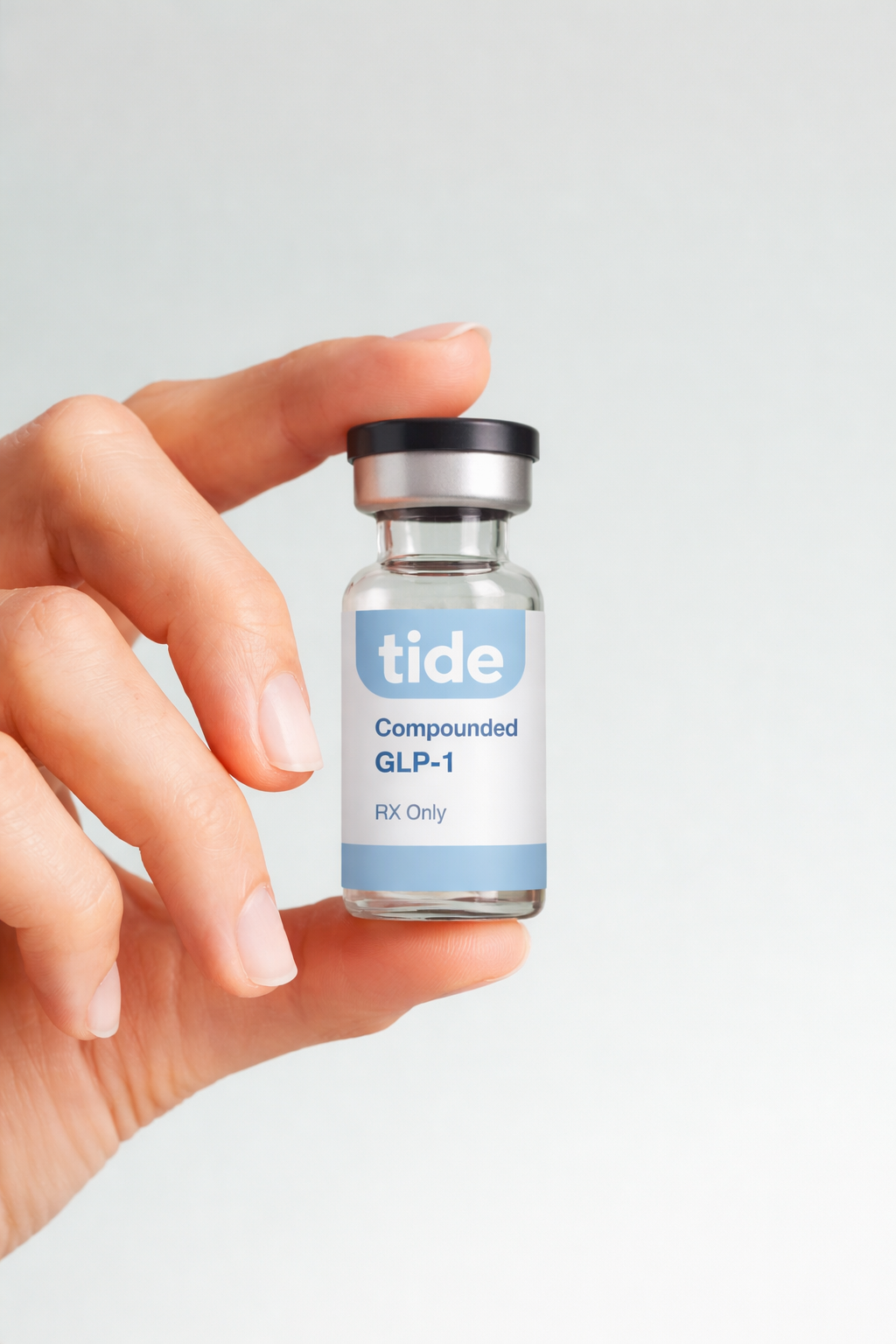
GLP-1 receptor agonists, including medications containing semaglutide or tirzepatide, are prescribed for weight management under medical supervision in appropriate candidates.
Central appetite regulation
GLP-1 receptors in the brain are involved in appetite and satiety signaling. Activation of these pathways may reduce hunger and food preoccupation for some individuals.
Gastrointestinal effects
GLP-1–based therapies slow gastric emptying, which may promote earlier and longer-lasting feelings of fullness after meals.
Metabolic effects
These medications influence insulin and glucagon secretion, which may support improved glycemic control and metabolic stability in some patients.
Clinical trials of FDA-approved GLP-1–based medications have demonstrated average weight reductions of approximately 10–20% over one year when combined with lifestyle counseling, though individual responses vary.
Hormone replacement therapy is commonly discussed for the management of vasomotor symptoms, sleep disturbances, and quality-of-life changes during perimenopause and menopause. Estrogen also plays a role in metabolic regulation.
Insulin sensitivity support
Some studies suggest estrogen therapy may improve insulin sensitivity, potentially addressing one contributor to midlife metabolic changes.
Lean mass preservation
Research indicates that estrogen may help support maintenance of lean body mass during midlife, which can be relevant for metabolic health and physical function.
Fat distribution patterns
Hormone therapy has been associated with reduced accumulation of visceral fat in some studies, though outcomes depend on formulation, timing, and individual factors.
Sleep and recovery
Improved management of night sweats and vasomotor symptoms may support better sleep quality, which is closely linked to appetite regulation and metabolic health.
Hormone therapy is not appropriate for everyone and requires individualized risk–benefit assessment by a licensed healthcare provider.
Emerging observational research suggests that some postmenopausal individuals using both hormone therapy and GLP-1–based medications may experience different weight-loss patterns compared with those using GLP-1 therapy alone. These findings are preliminary and do not establish causation.
From a physiological perspective, hormone therapy may address underlying hormonal contributors to metabolic change, while GLP-1–based therapies target appetite regulation and energy intake. When discussed, combination approaches should always be individualized, closely monitored, and guided by licensed clinicians.
There is no single approach that works for everyone during perimenopause. Licensed healthcare providers consider multiple factors, including:
GLP-1 dosing schedules, hormone therapy formulation, and monitoring plans are individualized rather than standardized.
Perimenopause-related weight changes reflect complex hormonal and metabolic shifts rather than lack of effort or discipline. GLP-1–based medications and hormone therapy are being studied as complementary tools for some individuals, but responses vary. Thoughtful, medically supervised care remains essential, and treatment decisions should always be individualized.
Davis, S. R., Castelo-Branco, C., Chedraui, P., et al. (2012). Understanding weight gain at menopause. Climacteric, 15(5), 419–429. https://doi.org/10.3109/13697137.2012.707385
Santosa, S., & Jensen, M. D. (2013). Adipocyte fatty acid storage factors enhance subcutaneous fat storage in postmenopausal women. Diabetes, 62(3), 775–782. https://doi.org/10.2337/db12-0911
Hurtado, M. D., Tama, E., Fansa, S., Ghusn, W., Anazco, D., Acosta, A., Faubion, S. S., & Shufelt, C. L. (2024). Weight loss response to semaglutide in postmenopausal women with and without hormone therapy use. Menopause, 31(4), 266–274. https://doi.org/10.1097/GME.0000000000002310
Chopra, S., et al. (2019). Weight management module for perimenopausal women: A practical guide for gynecologists. Journal of Mid-Life Health, 10(4), 165–172. https://doi.org/10.4103/jmh.JMH_155_19
De Paoli, M., et al. (2021). The role of estrogen in insulin resistance: A review of clinical and preclinical data. American Journal of Pathology, 191(9), 1490–1498. https://doi.org/10.1016/j.ajpath.2021.05.011
St-Onge, M.-P., & Gallagher, D. (2010). Body composition changes with aging: The cause or the result of alterations in metabolic rate and macronutrient oxidation? Nutrition, 26(2), 152–155. https://doi.org/10.1016/j.nut.2009.07.004
Lovejoy, J. C., Champagne, C. M., de Jonge, L., Xie, H., & Smith, S. R. (2008). Increased visceral fat and decreased energy expenditure during the menopausal transition. International Journal of Obesity, 32(6), 949–958. https://doi.org/10.1038/ijo.2008.25
Sowers, M. F., et al. (2008). Change in adipocytokines and ghrelin with menopause. Maturitas, 59(2), 149–157. https://doi.org/10.1016/j.maturitas.2007.12.006
Friedrichsen, M., et al. (2021). The effect of semaglutide 2.4 mg once weekly on energy intake, appetite control, and gastric emptying in adults with obesity. Diabetes, Obesity and Metabolism, 23(3), 754–762. https://doi.org/10.1111/dom.14280
van Can, J., et al. (2014). Effects of the GLP-1 analog liraglutide on gastric emptying, appetite, and energy metabolism in obese adults. International Journal of Obesity, 38(6), 784–793. https://doi.org/10.1038/ijo.2013.162
Müller, T. D., Finan, B., Bloom, S. R., et al. (2019). Glucagon-like peptide-1 (GLP-1). Molecular Metabolism, 30, 72–130. https://doi.org/10.1016/j.molmet.2019.09.010
Wilding, J. P. H., et al. (2021). Once-weekly semaglutide in adults with overweight or obesity. New England Journal of Medicine, 384(11), 989–1002. https://doi.org/10.1056/NEJMoa2032183
Mauvais-Jarvis, F., et al. (2017). Menopausal hormone therapy and type 2 diabetes prevention: Evidence, mechanisms, and clinical implications. Endocrine Reviews, 38(3), 173–188. https://doi.org/10.1210/er.2016-1146
Ronkainen, P. H. A., et al. (2009). Postmenopausal hormone replacement therapy modifies skeletal muscle composition and function. Journal of Applied Physiology, 107(1), 25–33. https://doi.org/10.1152/japplphysiol.91518.2008
Dam, T. V., et al. (2021). Transdermal estrogen therapy improves skeletal muscle adaptations after resistance training in early postmenopausal women. Frontiers in Physiology, 11, 596130. https://doi.org/10.3389/fphys.2020.596130
Cintron, D., et al. (2017). Efficacy of menopausal hormone therapy on sleep quality: Systematic review and meta-analysis. Endocrine, 55(3), 702–711. https://doi.org/10.1007/s12020-016-1072-9